Translate

Monday, 5 March 2018

British children transported to be sex slaves by the UK Government. INQUIRY INTO CHILD SEXUAL ABUSE FIRST REPORT CHILD MIGRATION PROGRAMMES, MARCH 2018

childmigrationscheme

On 1st March 2018, IICSA released its first report on the Child Migration Programmes that occurred within the UK for decades.  The report is 174 pages long, so I have outlined the contents, findings, institutions involved, problems that occurred etc.
It made shocking reading.

CHILD MIGRATION PROGRAMMES BACKGROUND
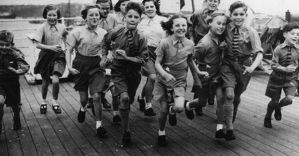
For those that aren’t familiar with what these were – In short UK governments were taking children in orphanages from the ages of five onwards and sending them overseas to places such as Australia, New Zealand, Southern Rhodesia (now Zimbabwe) and Canada.  Despite promises of oranges and sunshine and happy lives, many children became part of a conveyer belt of slave labour which included torture, neglect and abuse within a system so flawed that they were left exposed to predators.  The deception that occurred is also part of the scandal, as many children were told they were orphans, and many relatives were told their children had been adopted or had died.  People – young and old – went to their graves believing a web of lies peddled by the authorities.  You can read a little more about it in a previous blog post.
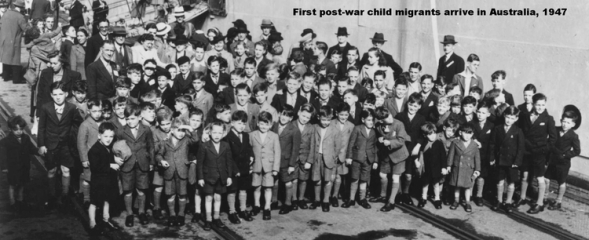
Image result for child migration programme
Those who survived to tell their tale appeared in front of the IICSA panel and gave moving testimonies of the abuse they endured, which has enabled IICSA to compile this comprehensive report.  I urge you to read the first few pages (namely pages 5-8) which are the testimonies of Michael O’Donoghue and Marcelle O’Brien.  They give a shocking insight into the sadistic nature of the UK children’s home regimes, as well as the awful treatment children endured when sent thousands of miles away.  It’s heartbreaking.
Child migration was also considered to be more cost effective than keeping children in residential homes in Britain (although we have doubts about whether that was actually correct).
Investigation Report – March 2018
Sadly, it’s not that dissimilar to the Tvind scheme that ran during the 1980s, where children were sent overseas by some London social services departments.  You can read my blog post about it here.  Despite requests, none of the local authorities concerned would provide any further information.

WHO WAS INVOLVED?
The agencies involved in ‘sending’ children in the migration programmes were mostly voluntary organisations, with a small number being migrated by local authorities. Some organisations, such as the Fairbridge Society and Barnardo’s, operated as both sending and receiving institutions, providing schools and homes in the country of migration. Others migrated children to institutions run by other organisations. From evidence available to the Inquiry, there was a sense in which these children were treated by some of the sending institutions as ‘commodities’ with one institution even referring to its ‘requisition’ for a specific number of children to be sent to Australia.
Investigation Report – March 2018
(Organisation and total amount of children they migrated)
  • Barnardo’s – (32,806 children)
  • The Fairbridge Society – (1,602 children)
  • The Children’s Society (previously known as Church of England Incorporated Society for Providing Homes for Waifs and Strays) – (3,296 children)
  • The National Children’s Home (AKA Action for Children) – (3,600+ children approx)
  • The Royal Overseas League – (804 children)
  • Cornwall County Council – (between 33-58 children)
  • The Salvation Army UK – (250,000 children, adults and families approx)
  • The Church of England Advisory Council for Empire Settlement – (408 children)
  • The Sisters of Nazareth – (1,103 children)
  • Father Hudson’s – (132 children)
  • The Catholic Church – (11,073 children)
  • The Children’s Friend Society (sent children to South Africa)
  • Quarrier Homes
  • Catholic Child Welfare Council
  • Southwark Catholic Rescue Society
  • London Council for the Rhodesia Fairbridge Memorial Association
Children were sent overseas from the UK, Wales and Northern Ireland (the latter of which was looked at in the Historical Abuse Inquiry, NI.)
However, the overriding force behind the scheme was, of course, the British government who had agreed with the Australian Commonwealth Government to send 50,000 children following the Second World War.  The Australian Government wanted to use the programme to increase the white population (and labour capacity).  It is the British government, this report concludes, whom systematically ignored the suffering of the children despite playing the central role in the programme.
Following a 1998 review undertaken by the House of Commons Health Select CommitteeGordon Brown (then Prime Minister) made a public apology to former child migrants.

WHERE WERE CHILDREN SENT?
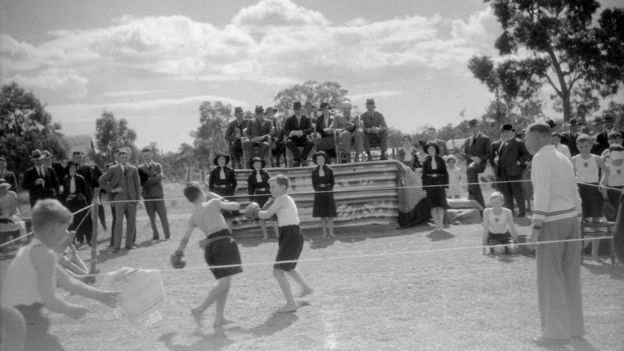
Image result for child migration programme
Fairbridge School, Pinjarra

Between 1947-1965, 3,170 children were sent overseas as part of the programme.  Around 400 of those were sent by local authorities, the rest were sent by organisations.
Receiving institutions in Australia
  1. Fairbridge Farm School, Molong
  2. Fairbridge Farm School, Pinjarra
  3. Northcote Farm School, Bacchus Marsh
  4. Barnardo’s School at Picton
  5. Barnardo’s School at Normanhurst
  6. Drapers Hall
  7. Methodist Children’s Home, Magill
  8. Dalmar Children’s Home
  9. Methodist Home for Girls, Perth
  10. Nazareth House, Geraldton
  11. Nazareth House, Camberwell
  12. St Joseph’s Orphanage, Neerkol
  13. Casteldare Boys’ Home
  14. Tardun Farm School
  15. Clontarf Boy’s Orphanage
  16. Bindoon Boys Town
  17. St Vincent de Paul’s Orphanage
Receiving institutions in Canada:
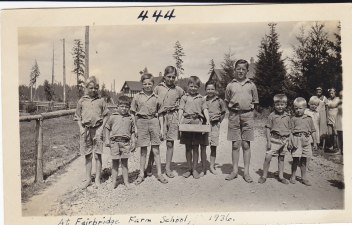
  1. Prince of Wales Farm School, British Columbia
Image result for mr rogers fairbridge school british columbia
Receiving institutions in New Zealand:
  1. The Royal Overseas League sent 549 children to foster care in New Zealand.
Receiving institutions in Southern Rhodesia:
  1. Rhodesia Fairbridge Memorial College
Once they arrived overseas, legal guardianship for the child would transfer to the national governments of their respective country, then to the provincial/state government, more particularly their child welfare departments. In practice, responsibility then devolved to the particular institution’s staff.
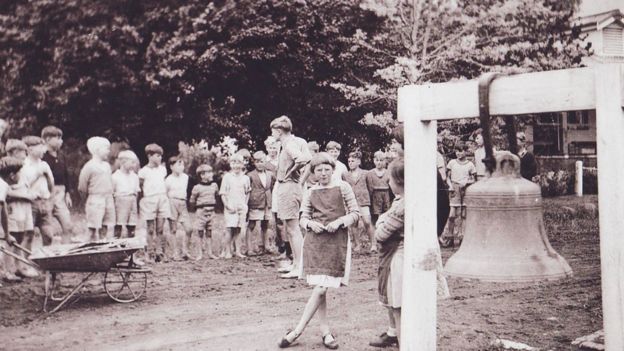
Image result for child migration programme
Fairbridge School, Molong


THE PROBLEMS THAT AROSE:
childmigrant
Under the Empire Settlement Act, 1922 (ESA), the UK government pledged to provide funding for the cost of children’s journeys as well as a maintenance element until they were 16-years old.
The ESA was renewed periodically until 1972, despite concerns raised in 1942 following an inspection in Western Australia by Sir Ronald Cross, who reported that he could not understand where the money was going, given the poor clothing the boys were wearing.
In respect of Australia, some of the programmes, including those operated by
the Anglican and Catholic churches, used a ‘group nomination’ system, whereby a
residential institution in Australia would send a request for a certain number or gender of children for migration, thus the children were considered as ‘commodities’, not as individuals within the ‘care’ system.

The Times, 14th March 1951

Diplomatic relations came first…
The Fairbridge Society became a highly regarded operator in the migration programmes with patrons including high-profile individuals and members of the Royal Family, as well as a close working relationship with the UK government.  This seemingly worked to the Society’s advantage as not only did it receive advance notice of the contents of a report, but also Lord Dodds-Parker (Under Secretary of State for Foreign Affairs and a strong advocate for Fairbridge on the Overseas Migration Board) lobbied the Home Secretary for an increase in funding.
Concerns arose and so the UK government sought to educate those countries as to methods of care.  However, this seemingly wasn’t successful as reports were received that were extremely critical of the conditions within the receiving homes.  This then led to a 1956 ‘blacklist’ of institutions that should no longer be used.
Related image
The government was loathed to upset the Australian government nor institutions such as Fairbridge and Barnardo’s by withdrawing funding and so the ‘blacklist’ of schools that had been drawn up in 1956 was effectively suspended so that Fairbridge children could be migrated as planned, even to schools on that list, and financial support and use of facilities continued until 1972.  There is a possibility of an intervention by HRH the Duke of Gloucester (then Fairbridge Society President), however the inquiry found no evidence to back this claim.

Image result for mr rogers fairbridge school british columbia
Duke of Gloucester


EXAMPLES OF PERSONNEL FAILINGS:

Related image
Bindoon, Australia

  1. Alfred Owen (who ran a Barnardo’s receiving home in Canada) had been convicted of sexual interference with girls in his care.  Barnardo’s sent out a female senior manager in 1889 to investigate the facilities, whihc led to a recommendation that locks should be put on bedroom doors and chaperones provided when girls were in vulnerable situations.
  2. 1940 – Mr Beauchamp (Principal at Fairbridge school in Molong, Australia) was told to resign after allegations that he had failed to prevent “immoral and perverted practices….on a serious scale”.
  3. Late 1945/early 1946 – Fairbridge UK was informed that a girl had made very serious allegations of sexual abuse against the new Principal at Molong, Mr Woods, which was also brought to the attention of a local parson. The police were involved, but a report later exonerated Mr Woods, praised Fairbridge and described the allegation as “can only be put down to the sexual stirrings of a hysterical adolescent mind”.
  4. Early 1948 – Several allegations were again made against Mr Woods, relating to physical abuse, books with a sexual content and “other matters too dreadful to mention.”  Sir Charles Hambro of Fairbridge UK responded: “Having seen the school in operation I cannot believe that there is any real basis for these allegations against Woods, and I shall not accept them until proven beyond doubt, but where there is smoke there may be fire, and it is our duty to make quite sure that the fire is completely extinguished. You could not have taken a wiser step than to do what you did”
  5. 1947 to 1968 – ‘Common Rules’ that applied to the Christian Brothers order included: Brothers were not permitted to have particular friendships with pupils, touch pupils on the face or otherwise fondle them or allow boys into their room.  Thus proving that if it was necessary to include such a condition, authorities already knew there was a problem.
  6. Early 1940’s – Mr Rogers (Duties Master at the Fairbridge school in British
    Columbia) was dismissed following allegations of improper behaviour, then
    re‑hired, but dismissed again after he was convicted of “immoral relations” with
    Fairbridge boys and imprisoned.
  7. 1950 – Fairbridge UK was notified of an allegation that a girl had been abused on a ship whilst on the journey to Australia, but did not “appear to have left any mark on her mind.”  A subsequent investigation concluded that she was “somewhat mentally retarded.”
  8. 1955 – A Picton housemaster, was dismissed on the grounds of suspicion of “indiscreet fondling” of boys at the school.
  9. 1956 – Two child migrants raised described Riverview as being “a kind of Borstal.
  10. 1958 – Concerns were raised that 23 boys mainly aged between 18 and 21 were potential victims of “serious sexual malpractices” by several individuals related to the Barnardo’s school at Picton.  It is clear that information about these issues was
    circulated among members of the UK government, which included: members of the UK High Commission in Australia, the Home Office and the CRO.  There had been some guilty pleas by the alleged perpetrators. The matter became known to MP Nigel Fisher who referred in correspondence to a “really rather bad case of sodomy between a teacher and boys at one of the Barnardo’s Schools in Australia”.
  11. 1958 – Seven boys wrote with concerns about Riverview, which led Commissioner Ebbs(Salvation Army UK) to write to Colonel Cooper in Sydney.
  12. 1960 – An allegation was made that a child in the UK had been “interfer[ing] in a homosexual way” with four other children, prior to migration by Barnardo’s.
  13. 1962 – Mr Phillips left his role as Molong Aftercare Office in 1962, “amid rumours of sexual abuse of children” against him and Edward Scott (although there was no documentation provided about Scott.)
  14. 1963 – Mother withdrew her children from Molong and made a written complaint after discovering a cottage mother had admitted flushing a child’s head down the toilet to correct the child’s bedwetting, and a riding crop had been found which the children said she whipped them with.
  15. 1965 – Mr Woods was dismissed from Fairbridge following concerns about his punishment of children.
  16. 1967 – Mr Jack Newberry, who had become Acting Principal of Fairbridge at Molong, was  “investigated following a series of allegations of sexual abuse and forced to retire” and that “Stories circulating about Newberry’s sexual perversities would be confirmed by a number of Fairbridge girls years later.”
  17. Evidence was seen regarding children in Rhodesia who had been sexually abused by Padre Dean and reported the issue to the headmaster, which enraged him and led to their being beaten and warned against spreading malicious lies.
  18. Action for Children was also made aware of a small number of complaints about
    child sexual abuse at Alverstoke, which has been reported to Operation Hydrant and remains under investigation.
  19. The Australian Royal Commission’s report into the three Salvation Army homes (including Riverview) made findings of very serious incidents of sexual abuse over an extended period of time. It also noted a culture of violence, an inadequate inspection regime, a culture of discouraging disclosure of abuse and evidence of the Salvation Army moving offending officers between different children’s homes, sometimes to protect its own external reputation, and potentially due to the religious devotional culture within the Army.
  20. One former child migrant alleged sexual abuse during the train journey to the boat. The alleged perpetrator was Canon Flint, who had a heavy involvement in the scheme and in three different Catholic organisations.  Although Canon Flint was known to have been deceased since 1982, the matter was reported to Warwickshire Police and the former child migrant’s solicitor informed.
  21. Eleven men gave oral evidence at the hearings to the Australian Royal Commission, during which they made allegations of sexual abuse against sixteen Christian Brothers. The Commission found that that in each decade from 1919 to the 1960s, there were allegations of child sexual abuse against Brothers, about which the Provincial Council knew; and that in each decade from the 1930s to the 1950s, allegations were raised against Brothers against whom there had been previous allegations. It concluded that the leadership of the Christian Brothers from 1947-1968 had failed to manage the institutions so as to prevent child sexual abuse.
  22. Some time after 1989, the ACMP received in the file of a former child migrant an enclosure to a letter from the Provincialate of the Congregation of Christian Brothers in Bath, which stated that the former child migrant and some others were sexually abused by a Brother in Australia, and that a teenager also abused younger boys at the school, as well as a book extract referring to physical and sexual abuse by a Brother. The ACMP assisted in family tracing but no formal report was made.
  23. In 1990, a former child migrant wrote a letter to Canon Flood alleging sexual and physical abuse by Christian Brothers in Australia.
  24. In 1994, there was reference in a newspaper article to a Christian Brother accused by a former child migrant of sexual abuse.
  25. In 1995, a former child migrant stated that he had spent nine years in institutions where he was physically and sexually abused.
  26. In 1995, a former child migrant met a Father Hudson’s worker to review his file, which stated that the individual had been badly physically and sexually abused in Australia.
  27. In 1998, the sister of a former child migrant stated that her sister had been sexually abused and whipped in the cellars before being sent to Australia.  The sister had been at a Nazareth House home prior to going to Australia.
  28. In 2002, a former child migrant wrote a letter to the Professional Standards Resource Group in Western Australia stating that he was sexually assaulted by a man while in the care of nuns in England. The allegation related to a gardener at a Nazareth House home in England.
  29. In 2009, a former child migrant reported harsh treatment by nuns in Australia and rape by a gardener/handyman.
Image result for child migration programme
Of course, it wasn’t just those in a position of authority that abused, the inquiry also heard evidence about peer-on-peer abuse as well as outside visitors abusing children.
  1. In 1999, a former child migrant disclosed that he had been sexually abused by older boys within the RFMC.
  2. In 2000, a former child migrant alleged that, prior to his migration, a visitor to the children’s home at Painswick perpetrated sexual abuse on other children. He recalled that the visitor was spoken to and his visits ceased.
  3. One former child migrant claimed she had been raped at the age of five by an eight year old boy living in the same home.
  4. Another stated he was sexually abused by a 14 year old boy when he was around the same age.
  5. A further former migrant alleged that children were sexually abused by an older boy in Magill.
  6. In 1961 a child migrant, who was by that time a young adult and who wanted to return home, was referred to in a letter, which stated that when he had gone to the Marist Brothers, another religious order, he had “interfered with” some of the younger boys in the college and was dismissed. He then went to Clontarf and Bindoon, and was again found to be interfering with younger boys.
  7. During the Catholic church’s migration period, one child migrant alleged sexual abuse on the ship on the journey to Australia. The matter was reported to the ship’s Captain, and in a letter to Australia House, the shipping company said that they had considered prosecution but this was not possible, so the perpetrator had been given a “bad discharge” and all practicable steps had been taken to prevent him from being re-engaged on any other ship.  In Australia the boy saw a doctor at the Psychiatry Clinic, who advised that he be placed in a normal family with grown up boys and girls.   The response of the CCWC in the UK was simply to investigate whether the boy’s mother in the UK would take him back: she was happy to do so but needed financial assistance for the return passage, which the CCWC declined to provide.

FINDINGS
…children had been treated worse than he had been as a prisoner of war.
(Reaction of a parent after visiting Fairbridge, Molong)
Investigation Report – March 2018
  1. No evidence was seen that migration ended specifically because the UK government decided to put a stop to it.
  2. The last child was migrated to Australia in 1970. Most, if not all of those children who had been migrated, remained within their receiving institution, despite the concerns that had been raised about the appalling conditions in which many of them were accommodated.
  3. Overall, there was evidence of sexual abuse of child migrants in 16 Australian institutions.
  4. Several witnesses recounted that they had been abused prior to being migrated, while still in institutions in England. Two said that they believed they may have been sent to Australia because they had reported their sexual abuse in this country.  Another said they had been abused whilst on the ship to Australia.
  5. After 1970, those children who had been migrated generally remained where
    they were. There was no evidence of efforts made to seek the return of the children. Matters seemed to go “silent” until Dr Humphreys and the CMT sought to bring matters to the public attention in the late 1980s.
  6. UK government accepts that it had knowledge that some former child migrants reported that they had been the victims of sexual abuse from at least 1989.
  7. Evidence was heard that Fairbridge UK knew of the alleged sexual abuse of child
    migrants in both Canada and Australia from as early as the late 1930s.
  8. In 1949 a damning report in Canada outlined a high pregnancy rate in ex-Fairbridge girls, which described the school as of being “in ill repute”, and concluded:  “unsatisfactory staff are largely to blame for the present state of affairs.
  9. Some school inspections conducted by the local Fairbridge Committee members  were carefully “staged” affairs.
  10. Mr Nigel Haynes, Director of Fairbridge from 1993 to 2008, was unable to explain why a misleading statement denying the existence of records mentioning abuse was going to be put out to the press.  He also reiterated to the inquiry that Molong was “independently managed by an Australian body and not accountable to the UK”, which the inquiry has found to be false.  More worryingly,  during the litigation against Fairbridge in Australia, the reverse position was argued – that London was responsible for the Fairbridge operations in Australia.  This has led the inquiry to conclude that both sides of the Fairbridge organisation were trying to distance themselves from responsibility.
  11. In the case of Father Hudson’s, some child migrants that in 1947/1948 were sent before there was a written maintenance agreement in place. This fits with the wider evidence that at times the focus of the Catholic Church migrating organisations appears to have been to migrate children as quickly as possible, which may have operated to the detriment of the individual children.
  12. In the case of the Catholic Church,  there is evidence that Brother Conlon knew of some of the allegations of sexual abuse by the Christian Brothers.
  13. In a book by Jim Hyland (former Chairman of CCWC), he described it as a “regrettable omission” that nobody from the CCWC or the CoR had been dispatched “to Australia to carry out its own investigation into arrangements and the standards of care provided”.  This was a serious failure.
  14. Child migration was a fundamentally flawed policy, and the UK government failed to ensure that there were sufficient measures to protect children from abuse and neglect.
  15. The UK government has not yet made any financial redress directly to former child migrants without delay and that payments should start being made within 12 months.  It is essential that all surviving former child migrants are offered such redress.
  16. It has taken successive British Governments far too long to acknowledge their full responsibility for the fate of the child migrants despite the truth being clear from the Government’s own documents, kept in the National Archives.

The Times, 5th June 1998


ACKNOWLEDGEMENTS/APOLOGIES

Image result for child migration programme
Former child migrants after finally receiving a formal apology by Gordon Brown, Prime Minister, on behalf of the UK Government in 2010.

  1. Many of the institutions involved in child migration have apologised for their role in it, some more fulsomely than others, and some for the first time in evidence before IICSA.
  2. Fairbridge has made no apology, and there is evidence that it made a conscious decision not to apologise “as it did not consider that it had anything to apologise for”.  Mr Nigel Haynes had no recollection of such a discussion taking place within Fairbridge, and made a personal apology in evidence before the inquiry.  The Prince’s Trust stated that at the time of the merger, Fairbridge had not given them the “full truth” on the amount of complaints by former child migrants about their treatment and stated that Fairbridge’s approach (in never having apologised) was “absolutely shocking”.  An apology was made on behalf of the Prince’s Trust  “for the hurt and suffering experienced by victims and survivors”, and the Trust would now be considering whether it should still use the Fairbridge name.
  3. The Children’s Society’s response to individual allegations has been adequate and it has offered support as appropriate and took relevant action.  In June 2017, Mr Reed (CEO of The Children’s Society) made a public apology on behalf of the CS, which he reiterated at the outset of his evidence to the inquiry, accepting that it was long overdue.  It has not provided any compensation to former child migrants.
  4. The Royal Overseas League has never been approached for compensation or redress to any former child migrants for any reason, including for sexual abuse.
  5. Cornwall Council has not been involved in any previous inquiries, participated in any other redress schemes, or paid any compensation to former child migrants. In September 2010, Cllr Neil Burden gave an apology to former child migrants.
  6. In response to the UK government’s 2010 apology, the Salvation Army UK produced a statement referring to the apology given in 2004 by the Salvation Army in Australia to former residents who had been subjected to any form of abuse, which was reiterated in 2009 but has not provided any compensation or redress to any child migrant.
  7. The Sisters of Nazareth and Catholic Children’s Society (Westminster) co-funded a counselling scheme, contributed financially to an Australian redress scheme and apologised to former child migrants.  They have not provided any compensation.
  8. Father Hudson’s remains proactive in taking allegations seriously and reporting them to the police.  It has funded a social work service but no compensations has been paid nor has any apology been forthcoming until evidence was given to the Inquiry, at which point they issued a formal apology.
  9. The Catholic Church has put in place administrative procedures for tracing families, records disclosure etc.  They derived a ‘Statement of Intent’ as well as created the Child Migrant Database, put practical support in place and offered numerous apologies, including another whilst giving evidence to the Inquiry.  However, no compensation has been paid, and although information was given about what has been provided in Australia, the Inquiry concluded that overseas actions should not be used by institutions in England and Wales to avoid responsibility.
  10. Through the national apology given in 2010, the evidence and apologies provided to the Inquiry, the British Government has now accepted the failings of the child migration programmes.

FILES
Image result for child migration programme
  • The Prince’s Trust, which now has responsibility for the Fairbridge Society archive, provided a substantial amount of archive material.  However, all the files from the Fairbridge Child Welfare Sub Committee from 1958-1982 are no longer in the archive, and it is believed that they were missing at the time the Prince’s Trust acquired them.
  • Major General Roderick Porter explained that there are virtually no records of The Royal Overseas League migration activities, apart from its annual reports, still in existence, and that there is no record of where any records were kept, whether they were disposed of and why.
  • Father Hudson’s has not been able to locate any reference to safeguarding policies or procedures from 1945-1974, nor any documents concerning the monitoring of
    child migrants’ welfare.
  • Investigation of allegations or evidence of sexual abuse within child migration programmes was hampered at times by the failure of some institutions, notably the Royal Overseas League and the Sisters of Nazareth, to have preserved the contemporaneous documentation.
  • Due to the inability to access their records in a straightforward manner, or at all, has caused some child migrants further distress and it is recommended that all institutions which sent children abroad should ensure that they have robust systems in place for retaining and preserving any remaining records that may contain information about individual child migrants, and provide easy access to them.
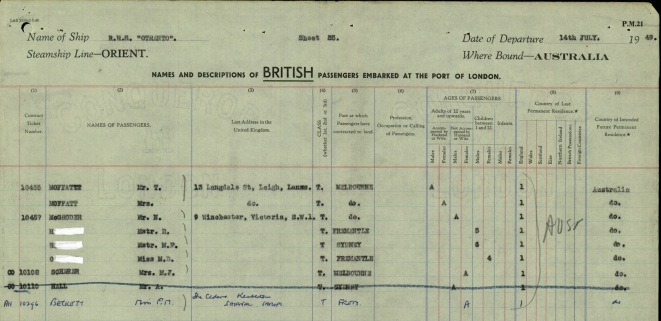
tna1
14th July 1949 – a small group of children aged 4-6 years in the care of the Catholic Church, leave for Australia on the RMS Otranto.  One was told her mother was dead – but unlike most, mother and daughter were finally reunited 56 years later.


FURTHER KEY POINTS:
Related image
  • The Fairbridge Society ceased involvement in child migration in the early 1980s.
  • Fairbridge has provided no support, counselling, financial support or reparation to former child migrants because, according to Mr Haynes, its charitable funds had to be used for its current core work.
  • Unlike other institutions, in 1950 the National Children’s Home sent selected Sisters (who had been trained and had worked with children in the UK) to accompany parties of children to Australia; stay for three years to assist the children, travel to meet others; and look at what the standards in Australia were and report back to the UK.   These reports (while relatively positive about the children themselves) were critical of the harsh conditions in Australia.
  • The Royal Overseas League resumed migration to Australia post-war in 1947, but without Government approval.
  • The ‘Forde’ Inquiry had observed that the child sexual abuse at the Catholic Church’s St Joseph’s orphanage, Neerkol was perpetrated by a range of persons, including workers, visitors and priests.
  • Lost Innocents Report, 2001 concluded that “the four Christian Brothers institutions in Western Australia stand out as the most culpable in their duty of care in relation to the physical and sexual violence that occurred within them.
  • In his 1993 book, ‘The Scheme: The Christian Brothers and Childcare in Western Australia’, Brother Barry Coldrey concluded that the Christian Brothers’ archives provided strong evidence of five Brothers who had committed multiple acts of sexual abuse, and a further six who had admitted committing single offences.
  • Brother Coldrey produced a further report, ‘Reaping the Whirlwind – The Christian Brothers and Sexual Abuse of Boys 1920 to 1944′ which suggested that awareness of sexual abuse among staff at these residential institutions extended to the operation of ‘sex rings’ in three of these Western Australian residential institutions, in which Brothers collaborated with one another in their activities, assisted and covered for each other, and may have shared the same boys.
  • In 1951, HM The Queen Mother – the Queen – became involved in trying to get one little girl back home to England.  This led to inquiries in the UK and Australia, but it was futile.
Image result for mr rogers fairbridge school british columbia

UK HOMES NAMED WITHIN THE REPORT:
  • Painswick
  • Alverstoke
  • Trenovissick Home, Cornwall

FURTHER READING:

Thanks to Cathy Fox Blog 

Thursday, 1 March 2018

Core participants in the UK Child Abuse Inquiry

INDEPENDENT INQUIRY INTO CHILD SEXUAL ABUSE

ALLEGATIONS OF CHILD SEXUAL ABUSE LINKED TO WESTMINSTER

Following the Preliminary Hearing on 31st January 2018, I am providing a brief overview of those who have been given core participant status in this Westminster strand element of the inquiry, as well as those who were refused.  You can find further details here.

WESTMINSTER STRAND: CORE PARTICIPANTS
Core participants, name of legal/representation and reason for application:
  • Crown Prosecution Service(CPS): Alastair Tidball: CPS has played a direct and significant role in relation to matters under investigation and/or has a significant interest in an important aspect of the matters under investigation and/or any other reason. The application is put on the basis that as part of the Westminster investigation, the Inquiry will investigate the responses of a wide range of institutions, including the CPS, and will also consider whether prosecuting authorities were aware of the involvement of people of public prominence associated with Westminster in the sexual abuse of children, and failed to take adequate steps to prevent any such abuse from occurring and/or took steps to prevent such abuse from being revealed.
  • Esther Baker: Ms Baker alleges that she was sexually assaulted by persons of public prominence associated with Westminster and that there were institutional failings in connection with that alleged abuse by police and law enforcement services. Ms Baker also alleges related failings by public officers and bodies.
  • Home Office: Sarah Townsend: The application is put on the basis that Whitehall has given consideration as to how best government departments might assist the Inquiry in the Westminster investigation and that if core participant status is granted, the Home Office will assume the role of the lead government department in coordinating the provision of material to the Inquiry.
  • IPCC (now IOPC): Rachel Taylor: The IPCC is currently managing a significant number of investigations into concerns that Police officers failed to adequately investigate allegations of child sexual abuse in relation to a number of people of public prominence associated with Westminster. The  Westminster investigation will investigate allegations that Ministers, party whips, political parties, the intelligence and/or security services, law enforcement agencies, and/or prosecuting authorities were aware of the involvement of people of public prominence associated with Westminster in the sexual abuse of children, and failed to take adequate steps to prevent any such abuse from occurring and/or took steps to prevent such abuse from being revealed.
  • Labour Party: Gerald Shamash: As the Labour Party is one of the main political parties at Westminster and has formed governments and the official opposition throughout the period likely to be under examination in this investigation.
  • Metropolitan Police Service: Sabrina Castiglione: The Commissioner, in her role as Chief Officer of Police of the Metropolis has a significant interest in the matters which the Inquiry will consider. The investigation will consider whether law enforcement agencies, and/or prosecuting authorities were aware of the involvement of people of public prominence associated with Westminster in the sexual abuse of children, and failed to take adequate steps to prevent any such abuse from occurring and/or took steps to prevent such abuse from being revealed. It is also stated that the Commissioner will have a direct and significant interest in ensuring that any recommendations which the Inquiry may make can be implemented, and also that the basis that the Metropolitan Police Service (MPS) may be subject to criticism in its handling of investigations into allegations of child sexual abuse.
  • RO-A1: Alleges that he was sexually assaulted by Cyril Smith in the early 1960s whilst he was a resident at Cambridge House.  He states that Smith pressured him to change the statement that he had made to police.  Possible failure of ‘Westminster’ institutions in connection with allegations made against Cyril Smith was raised by RO-A1 and others at the Rochdale hearings; those matters were outside the scope of the Rochdale investigation, but they are of relevance to the Westminster investigation.
  • RO-A2: As above.
  • RO-A4: Alleges that he was sexually assaulted by Cyril Smith in the early 1960s whilst he was a resident at Cambridge House.  He states that Smith pressured him to change the statement that he had made to police and allegation that the Government had served a D-notice to prevent publications of allegations concerning Cyril Smith.  Possible failure of ‘Westminster’ institutions in connection with allegations made against Cyril Smith was raised by RO-A4 and others at the Rochdale hearings; those matters were outside the scope of the Rochdale investigation, but they are of relevance to the Westminster investigation.
  • RO-A5: Alleges that he was sexually assaulted by Cyril Smith in the late 1980s whilst he was a resident at Knowl View.  Possible failure of ‘Westminster’ institutions in connection with allegations made against Cyril Smith was raised by RO-A5 and others at the Rochdalehearings; those matters were outside the scope of the Rochdale investigation, but they are of relevance to the Westminster investigation.
  • RO-A6: Alleges that he was sexually assaulted by Cyril Smith in the 1960s whilst he was a resident at Knowl View.  Possible failure of ‘Westminster’ institutions in connection with allegations made against Cyril Smith was raised by RO-A6 and others at the Rochdalehearings; those matters were outside the scope of the Rochdale investigation, but they are of relevance to the Westminster investigation.
  • RO-A7: Alleges that he was sexually assaulted by Cyril Smith in the early 1970s whilst he was a resident at Knowl View.  Possible failure of ‘Westminster’ institutions in connection with allegations made against Cyril Smith was raised by RO-A7 and others at the Rochdalehearings; those matters were outside the scope of the Rochdale investigation, but they are of relevance to the Westminster investigation.
  • RO-A8: Alleges that he was sexually assaulted by Cyril Smith after he became a resident at Knowl View in 1969.  Possible failure of ‘Westminster’ institutions in connection with allegations made against Cyril Smith was raised by RO-A8 and others at the Rochdalehearings; those matters were outside the scope of the Rochdale investigation, but they are of relevance to the Westminster investigation.
  • TIM HULBURT:  Played a significant part in revealing information relating to the possible funding of the Paedophile Information Exchange in the late 1970s by the Voluntary Services Unit based at the Home Office, where he was a consultant.
  • WILTSHIRE POLICE: May have a significant interest in an important aspect of the matters to which the Inquiry relates and that they may be subject to explicit or significant criticism during the Inquiry proceedings or in the report, or in any interim report. The Inquiry may wish to conduct a review of Operation Conifer (Edward Heath) as part of the Westminster investigation.

THOSE DENIED CP STATUS:
  • David Chalmers: Mr Chalmers states that he was formerly a high level Special Branch assetand a central component of a major phone trace and tap operation which was set up to counter a “black psychological operation” targeting the author of some contentious inquiries into child sexual abuse during the 1980s and 1990s.  Mr Chalmers believes this operation was being driven by high-level elements within the state apparatus. Mr Chalmers states that he acted with the authority of former Prime Minister John Major. Mr Chalmers states that the author’s identity was leaked and that the operation became subject to a D-notice. Mr Chalmers states that he can provide full details to the Inquiry.  I have concluded that, by reason of the information that he has provided and the allegations he has made, Mr Chalmers is best placed to assist the Inquiry as a
    witness rather than as a Core Participant.
  • Jonathan Brackenbury: The application is put on the basis that he alleges child sexual abuse as a military recruit serving in HM Forces over a period of eight years. He says that he has been pursuing the Ministry of Defence for an acknowledgment and that he has accumulated a large volume of correspondence associated with this. He also says that he has previously provided information to Operation Midland.  He subsequently wrote to the Inquiry on 14 January 2018 indicating that he wished to withdraw his application for designation in this investigation. He confirmed his willingness to be called as a witness regarding his experience of working as a Homeless Housing Worker in the West End / Earls Court area of London in the 1980s and information he supplied to Operation Midland as a result. He also confirmed his intention to file submissions in the future asking the Inquiry to open a separate investigation relating to child sexual abuse in the military.
  • Daniel Janner QC, Laura Janner-Klausner, Marion JannerGreville Janner‘s children were denied core participant status due to the fact Janner has his own separate strand to the inquiry.  Mr Janner had a significant interest in an important aspect of the matters under the Janner Investigation, in which he had already been granted core participant status, it was not appropriate to grant Mr Janner core participant status additionally in the Westminster investigation.  (It’s also worth mentioning that Daniel Janner seemingly told Robert Mendick of his intention to ‘undermine the enquiry from within.’)
  • G-1:  Allegations and awareness of abuse at his school and by clergy of
    the English Benedictine Congregation while in attendance at Fort Augustus School.  He was approached by Exaro News, which he says asked him to amend his police statement to include claims of abuse involving Westminster.’ He believes that his own story of abuse by clergy of the English Benedictine Congregation was adopted and erroneously featured in the ‘Westminster story’.  This does not fall within the scope of the Westminster investigation.
  • WM-A1: States that he told a social worker at Kent County Council and his school headmaster about his allegations, but this was not followed up. He was involved in the ‘rent-boy’ scene in London in the 1960s, and aware of politicians other than Heath attending parties at which sexual behaviour occurred.  His experiences as part of the ‘rent-boy’ scene and his knowledge of the involvement of politicians, as set out in his application and submissions, may well make him a useful witness to this investigation.
  • WM-A4: Alleged that he was raped at Dolphin Square while under the care of Hackney Social Services by a person he believed to have been Lord Janner. He also alleged that he was abused at a care home in Haringey and that Hackney Social Services had been aware of this abuse.  WM-A4 states he was taken to the Apollo nightclub where a police officer took his details and to whom, it is said, it must have been obvious that WM-A4 was young and vulnerable. He also referred to photographs being taken and to WM-A4 being told that the photographs were in a pamphlet which was being shown at Westminster.  WM-A4 was advised to apply for CP status under the Janner strand instead.
  • JA-A10: While JA-A10 has a significant interest in an important aspect of the matters under investigation in the Janner investigation, in which JA-A10 has already been granted Core Participant status, it is not appropriate to grant him Core Participant status additionally in the Westminster investigation.
  • JA-A11: While JA-A11 has a significant interest in an important aspect of the matters under investigation in the Janner investigation, in which JA-A11 has already been granted Core Participant status, it is not appropriate to grant him Core Participant status additionally in the Westminster investigation.
  • JA-A13: As above.
  • JA-A17: As above.
  • JA-A2: As above.
  • JA-A20: As above.
  • JA-A22: As above.
  • JA-A23: As above.
  • JA-A24: As above.
  • JA-A25: As above.
  • JA-A26: As above.
  • JA-A27: As above.
  • JA-A3: As above.
  • JA-A5: As above.
  • JA-A9: As above.
  • SABINE MCNEIL:  Received information from others relevant to alleged child sexual abuse and the alleged existence of a cult in Hampstead, said to be connected with Hampstead Christchurch, and that she can provide information about the actions of a number of agencies, including councils and the police, in relation to these allegations. Ms McNeill expressly states that she is not aware of evidence relating to child sexual abuse by “Westminster personalities” but says that the harassment which she has experienced can only be explained by orders “from ‘high up’”.  This does not fall within the scope of the Westminster investigation.
  • SARAH MCDONAGH: provided evidence of a paedophile ring connected to the Sussex Western Bench on which Ms McDonagh sat as a Magistrate, evidence which she says was suppressed by a number of people.  Ms McDonagh also provides general information regarding Freemasonry in the Chichester area and its alleged influence on the courts, and comments on the reputation of Seaford College.

LIST OF THOSE WITH CORE PARTICIPANT STATUS FOR ALL IICSA:
The full list of all those granted core participant status can be found here.

Thursday, 14 December 2017

Andrea Davison Shoot The Women First. Spy Story which exposes State Sanctioned Child Abuse


Just read Shoot the Women First by Andrea Davison and Tom Doe.
Running through the book is a web of  State sanctioned child abuse. Andrea tells her story with a touch of magic and an attention to detail.

It is at times beautiful at other heartrending and always exciting. Every page leads to revelations of a hidden hand behind world events.

Thrilling, tragic and utterly compelling read.

 Shoot The Women First, has now been released in hardback and paperback for Xmas.


ORDER THE PAPERBACK OR E-BOOK


ORDER THE HARDBACK


Chapters

1. Bastard Son. 13
2. Elephant Cage. 21
3. Petals Of Death. 31
4. Hostage. 39
5. Not So Cold War 45
6. Into The Frying Pan. 51
7. High Five. 57
8. After Eight 65
9. Unsanctioned. 73
10. Alarming News. 83
11. Lady Of The Lake. 93
12. Deadly Game. 107
13. Kock And Bull Story. 119
14. A Nadir 133
15. Suffer Little Children. 143
16. Birthday Card. 155
17. Fact Or Fiction. 165
18. Shopping List 177
19. What A Scallywag. 185
20. Propaganda Wars. 195
21. Neat Job. 207
22. Written In Blood. 217
23. Diplomatic Solution. 225
24. Somewhere Safe. 235
About The Author 245
Appendix. 247

Begining of firts Chapter. 

1. BASTARD SON

“One day I’m going to go up in a helicopter and it’ll just blow up.  MI5 will do away with me.”  Princess Diana

Tom dashed into the kitchen carrying a bundle of papers, an old leather case and a bottle of Champagne.  Shutting the door behind him, he sat down opposite me.  Outside the night had drawn a blanket of stars over the Comechingones Mountains.  People had lived here since the first moon shone on a home.
“Your Macur Statement is going viral.  It’s getting the truth out there,” Tom said.
“I hope so.  The victims are so vulnerable.”
“If you have the Serco report, I’ll take it with me to BA tomorrow.”
Pushing the laptop across the table, I said, “I’m editing, but take a look, and see what you think.”
The clock in the corner paced out time, as we read together.
A loud hammering on the door startled us.  Our eyes met in a glance of silent communication, Tom’s pupils dilated and I read his dark thoughts, ‘sounds like police’.
The hammering resumed, but here in Argentina, I had no reason to fear the Police.  Time stood still, frozen in urgency, and then the pounding stopped.  Silence hung in the air like the aftermath of a nuclear explosion.  Tom sprang up and was at the kitchen door when it flew open and a young man, brandishing a pistol, rushed in.  Tom smashed his gun arm against the wall.  The gun tumbled from his grasp, as a second armed man rushed in, striking Tom over the head with his handgun.
“We have just come for the documents,” he bellowed in perfect English.  Was this statement supposed to calm us?
   My training kicked in like a snort of cocaine; seconds became minutes as I assessed the scene.  Tom was on the floor his blood splattering the white walls as he grappled, half concussed, with the first assailant.  The second man stood pointing his gun at the duo, now locked like passionate lovers in an embrace.  Telepathically Tom said, ‘Get the machete; I’ll buy you time.’
Neither assailant noticed me turn and run down the corridor to the bedroom.  Thrusting my hand under the pillow, I found the machete Tom had put there earlier.  Drawing it out the blade glinted in the cold electric light.  That morning, Tom had spent hours sharpening its edge top and bottom.  “More frightening than a 9mm close up,” he said prophetically.
Narrowing my thoughts to a perfect point, I stroked the blade with a snipers instinct.  Brandishing the Machete, I ran down the corridor back to the kitchen.  Tom was still struggling and rolling on the floor with the first attacker.  The second man, hearing steps turned bringing up his gun level with my face.  Subconsciously I noted the matt black metal of the small gun, the trained stance, his youthful, handsome face.  Raising the blade in a seamless movement, I angled it to take off his head at the neck.  Staring into his hard chocolate eyes for a fraction of a second I grasped the power, he quailed, turned and fled.  It was a good choice; his .32 caliber bullets would not have stopped me in the five feet between us.
Tom, sensing it was over relaxed his grip on the first attacker, who snatched up his fallen gun, fleeing after his friend.
“Tom, are you Okay,” I asked, as he stood up shaky and dazed, blood streaming from his open wound into his eyes and down his cheeks.  Lifting a hand to wipe away the blood, he said,
 “Fine; I’m fine.  Lock the door.”
Twisting the key in the door, I went back to help him.
 “Sit down,” I said, leading him to a straight-backed wooden chair.
He collapsed into it, as the adrenaline stopped pumping through his veins.
We needed help, so picking up the cell phone I rang Beth, who lived on the high slopes of the mountains overlooking my house.
“Beth its Tara, two gunmen attacked us, please phone the Chief.”
“Where are you?”
“At home.”
“Wait there, I will come soon.” 
Our mutual friend, the Chief of Police is a charming and resourceful man.  He helped me settle into my new country by finding Beth.  She was one of those rare and beautiful people who would do anything for anybody.  Her husband Richard spent his working life, creating special effects in films and thrilling people with his magic tricks.  Somewhere on his journeys, this Englishman found a dark beauty with the heart of an angel.
In what seemed like only minutes, the Chief had everything locked down and his team of plain-clothed officers was in the house.  Tom went in a police car to the local hospital along with Beth as an interpreter.  A police officer in dark jumper, combat pants and short black combat boots, sat with me, while the house and garden was dusted for prints.
 In Argentina, children learn English at School so even with my poor Spanish I could make myself understood.  A detective man with a moon face and tough look said, “Get the valuables and go to another casa.  Do you have somewhere to go?” 
“I have amigos who live nearby, I will phone them.”
As the detective watched, I called Alicia and filled her in on the details.
 Alicia is of German extraction, married to Cletus a full-blooded German.  They made a complimentary couple.  Alicia surrounded herself with family and friends, doling out ladles of love.  Cletus was the strong man of the duo brave and brusque.  Cletus came on the phone, and I repeated the story, when I told him about the Machete, he chuckled.
“We’re on holiday right now, but Carl and Otto are there.  Just stay at the Cabaña by the pool.  Stay as long as you like.”  Cletus said.
Thirty minutes later, Tom flounced in with Beth.  He was battered and sporting a few stitches over his right eye.                           
“The hospital was excellent.  We went right to the top of the queue.”
“That’s great.  Alicia and Cletus are giving us the cute spare house by the pool.”
“Fantastic.  We need to get you out of here,” Tom said.
Beth nodded agreement.
When the detectives finished, Beth drove us to our friend’s hacienda, then returned home.
Entering the compound, Otto greeted us with his Pocket Browning.  We embraced as the seven-foot tall electric gates closed behind us.  The hacienda was under lockdown, surrounded by high fences and paroled by four big dogs who knew us well.
 Otto had been a Hitler Youth, but that was long ago.  His haggard face, patrician nose and sky blue eyes looked at me with compassion.  His command of English and Spanish was like my command of German, almost zero.  However, warmth and friendship are a language of their own.
 Carl, his grandson, was a strapping lad of seventeen.  His close-cropped blond hair adorned refined carved features and a razor-sharp mind.  He was the epitome of his German heritage, but the furthest youth from Hitler’s conscripts as could be.  Carl had inherited his Mother’s caring nature and his Father’s bravery.
  “Come, the Cabaña is ready for you,” Carl said, “Dad told me what happened, are you both OK.”
“Thanks, we’re fine.”
Grandfather and grandson, the old tree and the sapling would not let any intruder in alive.
The Cabaña’s red clay tiled roof overhung the red brick walls.  Rows of bricks interlaced with cosmetic concrete slices reminiscent of the witch’s house in Hansel and Gretel made out of sweets.  Towels, sheets and pillowcases were stacked up on a bench and the water heater was on.     
We dumped everything on the kitchen floor and opened a bottle of Champagne.  Grabbing two wine glasses from the cupboard, I went outside.
It had been a hot day and the evening warmth was balmy.  A potted jasmine grew by the door its tendrils thick with small white heavily scented flowers.  Surrounded by its fragrance, we settled down at the table by the dark and sky blue tiled pool.  Two of the dogs nestled close knowing something had happened.
“Well, life is never boring.  You did well,” I said.
“That’s what Staff taught me, in close, go for the gun arm.”
We smiled at each other.  The danger had passed and finally drained away with the first sip of champagne.  We were safe, we were happy and life was full of possibilities.
The cell phone rang, intruding on our peace,
“Hello.”
“Are you Okay?” a familiar American voice said.
Ronald was a former arms dealer and a King Saud favorite who had worked along with the agency for donkey’s years.
“Yes, just two idiots with guns.”
We never listened to each other’s calls, so Tom took his glass and returned to the Cabaña.
“We’ll send up some people from BA,” [1] Ronald said.
 “No, it’s okay; I have plenty of protection right here, but how…”
“Grapevine.  Are you sure you’re Okay, we can send someone?”
The soft head of an Alsatian brushed against my knee.
“No, really, we are safe here, friends are looking after us.”
“Who were the men?”  Ronald asked.


[1] Buenos Aires 


ORDER THE PAPERBACK OR E-BOOK


ORDER THE HARDBACK


Wednesday, 13 December 2017

Macur review alters Report about Pedophile Police Chief

rebecca_logo_04
NORTH WALES POLICE deliberately with-held sensational evidence about Gordon Anglesea from the North Wales Child Abuse Tribunal.
The force suppressed the fact that the retired police superintendent lied when he was questioned under caution about an alleged indecent assault.
That’s the revelation which emerges from the updated version of the Macur Review, headed by Lady Justice Macur, released on December 5.
The Review — launched in 2012 by then-Home Secretary Theresa May — examined the workings of the 1996-2000 North Wales Child Abuse Tribunal headed by Sir Ronald Waterhouse.
The case of Gordon Anglesea was central to the Tribunal’s hearings.
Anglesea’s name was removed — “redacted” is the technical term — from the Macur Review when it was published in March 2016 because he was due to stand trial on historic child abuse charges.
He was convicted at Mold Crown Court in October 2016 and died in prison shortly after he began a 12 year prison sentence.
The new version of the report — which follows a Rebecca campaign to have the redactions removed — adds to the growing body of evidence showing North Wales Police (NWP) was determined to  protect Anglesea.
It reveals that in 1997 a woman made an allegation that she had been indecently assaulted by Gordon Anglesea.
uISgKo6q_400x400
ALAN CAIRNS
THE WELSH secretary released the revised Macur Review — a report jointly commissioned by the Wales Office and the Ministry of Justice — in a statement to the House of Commons on December 5. For more than a year Rebecca has been calling for an unredacted copy of the report. In the days after Anglesea was convicted, we asked the Ministry of Justice if it would provide an updated version. A spokesman said no. In August this year we made a Freedom of Information request. This was refused – a refusal confirmed by an internal review which added that the information “was intended for future publication”. The Rebecca appeal to the Information Commissioner was being processed when the government decided to publish the amended report… 
The Review says that the woman — “an adult acquaintance of the family” — reported the matter to the North Wales Police.
The force submitted a file to the Crown Prosecution Service which decided there was “insufficient evidence” to prosecute.
The North Wales Police did not tell the Tribunal — still sitting at this point — about the allegation.
However, there were brief reports about the case in the national press which alerted the Tribunal.
The Macur Review notes that the Tribunal’s legal team wrote to the chairman, Sir Ronald Waterhouse:
“… we have requested sight of the NWP file in respect of the allegation of indecent assault …”
“The NWP’s legal representatives are concerned that this allegation (of indecent assault upon an adult) is entirely irrelevant to the issues before the Tribunal. “
“We believe that we should at least see the file, and unless you take a contrary view, we propose to insist upon its production to us.”
Lady Justice Macur notes that the words “justification needed” were written on the note.
She adds:
“ …  it does not appear that the matter was taken any further.”
The new version of the Macur Review makes it clear that North Wales Police deliberately covered-up a critical element of the case.
Lady Justice Macur reveals that Anglesea had “lied when first questioned under caution” about the alleged offence.
She notes:
“I regard the evidence that Gordon Anglesea had lied when first interviewed under caution about the allegation of indecent assault against an adult acquaintance of the family was relevant to the issue of his credibility.”
“Counsel to the Tribunal do not appear to have been made aware of this fact and would have been at a disadvantage in justifying their request for disclosure.”
“This information may have been significant in the Tribunal’s appraisal of his [Anglesea’s] credibility and would have been ‘fresh’ evidence to that which had been available in the libel trial.”
North Wales Police did not want this damaging piece of evidence to come out.
The force was covering up for Gordon Anglesea …

♦♦♦ 

THE REVIEW also reveals that other important information was kept from the Tribunal.
Lady Justice Macur reveals the existence of an internal memo written by government law officers in May 1993.
This noted that “ … enquiries have also been made concerning Anglesea’s behaviour in other areas of his life.”
This revealed:
“One or two minor items of gossip concerning him have been reported to the investigating officers. For example … seen him at a local homosexual club … not been confirmed.”
These inquiries also included his “domestic life” which “also failed to reveal any indication at all of any homosexual inclinations on his part …”
macur_lj1
LADY JUSTICE MACUR
THE JUDGE, who headed the four year £3 million Macur Review of the Waterhouse Tribunal, revealed an enormous amount of new information. Although much of it was critical of Tribunal chairman and fellow judge Sir Ronald Waterhouse she still decided there were no grounds to overturn his conclusions. Rebecca has challenged her verdict in two articles  — Bloody Whitewash and The £3m Whitewash.
This memo was never mentioned in any of the public hearings of the Tribunal.
Nor was the fact that it was common knowledge among police in Wrexham that Anglesea was having an affair with a young woman police constable (WPC) in the 1980s.
The Macur Review is also silent on this relationship.
The WPC made — but later withdrew — an allegation that Anglesea raped her during a night shift at Wrexham police headquarters.
Rebecca knows her name but is not revealing it — our investigation into this continues.
From 1979 Anglesea was in charge of the Bromfield division which covered outlying districts of Wrexham.
The WPC lived in this area and officers on patrol regularly saw Anglesea’s car outside her home.
The significance of this was to become clear in 1994 when Anglesea sued four media companies for libel.
They accused him of abusing three boys.
During the court case, Anglesea’s defence team portrayed him as a happily-married man.
Many North Wales Police officers will have known that this picture was false.
Yet these officers stood by and watched as the jury found for Anglesea by 10 votes to 2.
He walked away with £375,000 in damages.

♦♦♦ 

THE REVISED version of the Macur Review is also silent about another example of North Wales Police protecting Anglesea.
At the time the Review was established, in 2012, a new police investigation was launched — Operation Pallial, carried by the National Crime Agency on behalf of North Wales Police.
There was an agreement between Operation Pallial and the Macur Review “governing how the two teams would work in tandem”.
anglesea
GORDON ANGLESEA
FROM THE moment allegations of abuse surfaced about the police superintendent in the early 1990s, North Wales Police failed to investigate him properly. In the years that followed the force launched a sophisticated — and successful — operation to cover up its shortcomings. It wasn’t until an outside body — the newly-formed National Crime Agency — was called in that Anglesea was finally brought to book…
Photo: Trinity Mirror
This means the Macur Review should have been aware of a highly significant incident which took place in April 2002.
Two North Wales Police detectives interviewed a man in Liverpool’s Walton Prison who gave them information about an alleged abuser with a distinctive birthmark.
This man — who can’t be named for legal reasons — gave evidence when Anglesea stood trial in the autumn of 2016.
The jury found his evidence convincing and convicted Anglesea of indecently assaulting him in the 1980s.
Back in 2002, North Wales Police detectives interviewed this prisoner as part of Operation Angel, an investigation into further allegations against already convicted child abuser John Allen.
Internal North Wales Police records show the prisoner handed detectives a piece of paper with the names of three of the men he said had abused him.
The third name on the list consisted of a Christian name: “Gordon”.
The witness noted that “Gordon” was “prim and proper dressed, birthmark on face …”
There followed an exchange of emails which reveal senior officers were aware “Gordon” could well be Anglesea.
One of these emails talked of “keeping quiet”.
A decision was taken not to investigate further.
None of this was known until the National Crime Agency (NCA) began investigating Anglesea in 2012 as part of Operation Pallial.
The NCA were concerned about the way North Wales Police had dealt with this matter and made an official complaint to the force.
Only the two officers who interviewed the prisoner — a detective sergeant and a detective constable — were investigated.
When Anglesea was convicted last October, North Wales Police told Rebecca:
“We can confirm that North Wales Police Professional Standards Department have received a complaint as a result of Operation Pallial that is being investigated.”
North Wales Police have now told us the investigation was “finalised” in October 2016:
“ … there was no case to answer for the two officers; one of whom had retired some time ago.”

♦♦♦ 

THE PROTECTION of Gordon Anglesea continued even after he started his 12 year prison sentence.
His conviction meant that his considerable police pension — perhaps as much as £25,000 a year, all fully funded by taxpayers — was potentially forfeit.
This decision was in the hands of the Police and Crime Commissioner for North Wales, retired police inspector Arfon Jones.
arfon-jones
ARFON JONES 
THE POLICE and Crime Commissioner for North Wales, Arfon Jones is a retired police officer who worked under Gordon Anglesea in the 1980s. He was a prosecution witness in Anglesea’s criminal trial in 2016. Anglesea claimed he rarely visited the Bryn Estyn children’s home but Arfon Jones told the court he often dropped his boss at the complex.
Photo: Police & Crime Commissioner’s Office
Under the Police Pensions Regulations 2015 a former police officer can be stripped of his pension if the offences were
“ … committed in connection with the [officer’s] service as a member of a police force and in respect of which the Secretary of State for the Home Department has issued a forfeiture certificate.”
After Anglesea’s conviction, Arfon Jones “concluded this was a case where the forfeiture of pension was appropriate.”
However, he had not applied to the Home Office for a forfeiture certificate by the time Anglesea died in prison on 15 December 2016.
After Anglesea’s death — but without consulting the Home Office — he decided that his widow Sandra should receive half of his pension.
Jones noted:
“There is no precedent in law to with-hold that 50 per cent especially as the beneficiary has not been convicted of any offence.”

♦♦♦ 

NEXT
GORDON ANGLESEA & ARFON JONES: UNANSWERED QUESTIONS
NORTH WALES Police Commissioner Arfon Jones has declined to answer Rebecca questions about his role in the Gordon Anglesea affair. Jones, a former North Wales Police inspector, won’t say why he allowed Anglesea’s widow to keep half of his pension without consulting the Home Office. Nor will he explain why his damning testimony against Anglesea in last autumn’s trial did not feature in the hearings of the North Wales Child Abuse Tribunal in 1996-97. And he won’t say if he made a statement when North Wales Police originally investigated abuse allegations against Anglesea in the early 1990s …

♦♦♦

NOTES
1
The revised Macur Review can be found here.
2
Rebecca has published many articles about the North Wale Child Abuse Inquiry — see the Child Abuse and Gordon Anglesea pages for more details.
3
The paragraphs from the Macur Review which relate to this story are:
INDECENT ASSAULT 
7.18
I am aware that an allegation of a relatively minor indecent assault was made against Gordon Anglesea by an adult acquaintance of his family prior to the commencement of the Tribunal hearings. It appears that Counsel to the Tribunal was informed that “the CPS had decided to take no further action in the case on the grounds that there was insufficient evidence to support criminal proceedings”, but apparently not of the fact that Gordon Anglesea had lied, on his own subsequent admission, when first interviewed under caution about the allegation. A note to the Chairman from Mr Gerard Elias QC and Mr Treverton-Jones indicates that, “we have requested sight of the NWP file in respect of the allegation of indecent assault …The NWP’s legal representatives are concerned that this allegation (of indecent assault upon an adult) is entirely irrelevant to the issues before the Tribunal. We believe that we should at least see the file, and unless you take a contrary view, we propose to insist upon its production to us.” However, a manuscript annotation reads “justification needed” and it does not appear that the matter was taken any further.7.19
I wrote to the present Chief Constable of the NWP [Mark Polin] on 15 May 2015 in relation to this non disclosure. The Chief Constable responded indicating that there is no material in the possession of the NWP to indicate why the file was not disclosed, but that it is possible that the file’s relevance to the issue of credibility was overlooked. Having looked into the matter, the Chief Constable noted that Gordon Anglesea had been interviewed during the course of the investigation into the indecent assault and an advice file submitted to the CPS, who decided to take no further action.7.31
I regard the evidence that Gordon Anglesea had lied when first interviewed under caution about the allegation of indecent assault against an adult acquaintance of the family was relevant to the issue of his credibility. Counsel to the Tribunal do not appear to have been made aware of this fact and would have been at a disadvantage in justifying their request for disclosure. It is likely that the NWP overlooked the issue of credibility in favour of considering whether the facts of the alleged offence constituted similar fact evidence. This information may have been significant in the Tribunal’s appraisal of his credibility and would have been ‘fresh’ evidence to that which had been available in the libel trial.
INTERNAL MEMO
5.39  

I have seen the further faxed memorandum from [name redacted] to the Legal Secretariat’s officials on 10 May 1993 dealing at greater length with issues of discrepancy and credibility. It concludes, “although not directly relevant, enquiries have also been made concerning Anglesea’s behaviour in other areas of his life. One or two minor items of gossip concerning him have been reported to the investigating officers. For example … seen him at a local homosexual club … not been confirmed … [enquiries into his] domestic life have also failed to reveal any indications at all of any homosexual inclinations on his part …” A background note briefing the AG [Attorney General] subsequently in July 1993 assessed Gordon Anglesea to be of heterosexual orientation.

♦♦♦ 

© Rebecca 2017
Published: 12 December 2017

Sunday, 5 November 2017

Shoot the Women First new book by Andrea Davison and Tom Doe

Andrea Davison has released a new Book SHOOT THE WOMEN FIRST available on Amazon

SHOOT THE WOMEN FIRST by [Davison, Andrea, Doe, Tom]

Gripping, topical and gut-wrenching true-life adventure memoir of British born intelligence agent Andrea Davison. Intelligence Services few know exist, secret agreements running behind world events and an arcane blood-line. Step into mystery with Shoot the Women First for an exhilarating ride to the other side of the looking glass. 
From the icy cold of Siberia to the burning deserts of Iraq; from the busy streets of London to the wilds of Scotland. Andrea races against time to unearth secrets elite insiders keep veiled by propaganda and hidden via murder and imprisonment. State assassins, suicides to order, set-ups, child abuse, all backed by a relentless road roller of a legal system designed to serve as a mechanism of cover-up for an elite few. 
The game of intelligence is the greatest game ever played. The protagonists and heroes often disappear their stories lost in the shifting sands of time. Will Andrea solve the puzzle and save herself from assassination or jail? 
Shoot the Women First is the untold story of a secret global Intelligence Service and a hidden blood-line. Going behind the masks of Governments and State agencies, Shoot the Women First goes to the heart of a global deception perpetrated upon us all.


https://www.amazon.com/Andrea-Davison/e/B0771YGJX9/ref=dp_byline_cont_ebooks_1